.svg)

Unretirement: Because Apparently Retirement Retired

Interview with Carly Roszkowski, Vice President of Financial Resilience Programming at AARP
Editor's Note
For decades, retirement was sold as the finish line. Work hard, save enough, and eventually trade deadlines for golf tees, gardening gloves, or long afternoons doing absolutely nothing.
The reality for many Americans and many within our GenSando community looks very different.
We recently sat down with Carly Roszkowski, Vice President of Financial Resilience Programming at AARP, to talk about one of the fastest-growing trends shaping work and aging today: unretirement—the growing number of people returning to work after they've already retired.
As the nation's largest nonprofit dedicated to empowering people as they age, AARP helps millions of Americans navigate financial security, caregiving, work, health, and retirement. Through its research and advocacy, the organization has become one of the leading voices documenting how longer lives, changing careers, and economic pressures are reshaping what aging looks like in America.
And according to Carly, retirement may be one of the biggest things being redefined.
Retirement's Plot Twist
For years, unretirement rates hovered around 3%. Then COVID happened.
AARP's research found that the number of retirees returning to work doubled to 6% in 2025 and has since climbed to 7%.
What's surprising isn't just the increase—it's why people are coming back.
Nearly half of retirees who returned to work said they did so because they needed help paying for everyday expenses. Not a dream vacation. Not a second home. Groceries. Utilities. Healthcare. Life.
That's a significant shift from previous generations, where returning to work was often tied to staying active or earning extra income.
Even more telling, 28% of retirees told AARP they believe they retired too early.
"The math isn't working for many people," Carly explained. Rising costs, longer lifespans, and unexpected financial pressures are forcing many Americans to rethink what retirement actually means.
At the same time, money isn't the whole story.
Many retirees return because they miss the social interaction, routine, and sense of purpose that work provides. They want to stay engaged, connected, and mobile. Work isn't just about a paycheck anymore—it's often about belonging.

The New Face of Work After 50
One trend Carly has watched closely is the rise of entrepreneurship among older Americans.
During the pandemic, many adults over 50 started businesses, launched consulting practices, or turned side projects into income streams. Others embraced freelance work, gig opportunities, substitute teaching, or seasonal work that offered flexibility without the demands of a traditional full-time job.
In many ways, older adults are becoming some of the most entrepreneurial workers in the economy.
The difference is that they bring decades of experience, established networks, and deep expertise.
Yet many funding systems, startup programs, and entrepreneurial resources still focus overwhelmingly on younger founders.
That's a missed opportunity.
The Sandwich Generation Strikes Again
Of course, there is another major factor driving unretirement: caregiving.
Seven out of ten caregivers are still employed. Many are women over 50 balancing jobs while supporting aging parents and helping adult children or grandchildren.
Caregivers spend an average of $7,000 annually out of pocket, while also navigating doctor appointments, transportation, scheduling conflicts, and workplace disruptions.
For many families, retirement isn't delayed because they want to keep working. It's delayed because someone still needs help.
Carly sees this reality everywhere.
Even in her own life, she is thinking ahead. While her parents remain healthy, they live in Maine, and she knows caregiving conversations are likely ahead. Her husband experienced another version of the challenge when he lost his job at age 50 during COVID.
Today, he pieces together income through freelance graphic design, substitute teaching, and seasonal work. That flexibility also allows him to support his mother, who lives nearby following the loss of his father last year.
It's a story that feels increasingly familiar to many GenSando readers.

Experience Is Not a Liability
Despite labor shortages, older workers continue to face barriers.
AARP research shows that 64% of workers over 50 have experienced or witnessed age discrimination. Nearly one-quarter worry about losing their jobs, while 67% worry they would struggle to find another one.
Yet Carly believes employers are overlooking one of their biggest competitive advantages.
This is the most educated older generation in history. Many can continue contributing in professional roles for years longer than previous generations. They bring experience, perspective, resilience, and often a growth mindset that businesses desperately need.
And the workforce itself agrees. More than three-quarters of workers say they enjoy working alongside older colleagues.
So What Happens Next?
For Carly, the decision to retire—or return to work—is deeply personal.
She often thinks about her father, who spent his career working on the railroad. After years of physically demanding work outdoors, retirement was something he earned and looked forward to. He retired as soon as his pension allowed.
Today, however, he remains incredibly active.
That's why Carly believes everyone should have the freedom to choose. In a perfect world, people would be able to work as long—or as little—as they want.
But that choice is becoming harder to achieve.
The bigger lesson from AARP's research is that retirement is no longer a single moment in time. It's becoming a series of decisions shaped by finances, caregiving, health, purpose, and opportunity.
Or, as many in the sandwich generation already know, life doesn't always follow the plan.
Sometimes retirement becomes reinvention. Sometimes it becomes freelance work. Sometimes it becomes helping your parents while figuring out your own future.
And increasingly, that's not the exception. It's the new reality.

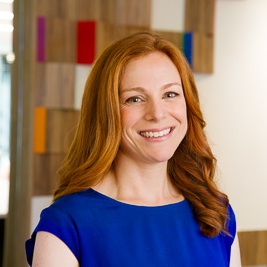
Carly Roszkowski is the Vice President of Financial Resilience Programming at AARP, where she leads strategy and outcome development within Financial Resilience and the Work and Jobs issue area. She helps individuals over the age of 50 obtain and maintain the level of employment they need or desire by increasing the competitiveness of 50-plus workers in the labor market, improves access to all forms of work opportunities for the 50-plus, and helps to eliminate age discrimination in the workforce.
Carly has over 20 years of experience developing and executing successful business and integrated marketing strategies, brand campaigns, and strategic partnerships for leading nonprofit organizations. She has been with AARP for eight years and has spent time at AARP Foundation, and AARP Driver Safety. Prior to AARP, Carly directed marketing and communications at Teaching Strategies, an Education Technology company, and spent more than a decade in consumer and business-to-business offerings at Discovery Communications; she began her career in fundraising with the World Wildlife Fund.
Carly lives in Silver Spring, MD with her husband, three children, two fish, and one dog.
Spotlight