.svg)

The Silver Tsunami Is Hiring: High-Demand Healthcare Careers for Every Generation
Unexpected healthcare career paths for recent graduates, older workers, Sandwich Generation families, and maybe you.
LAUGH LINE
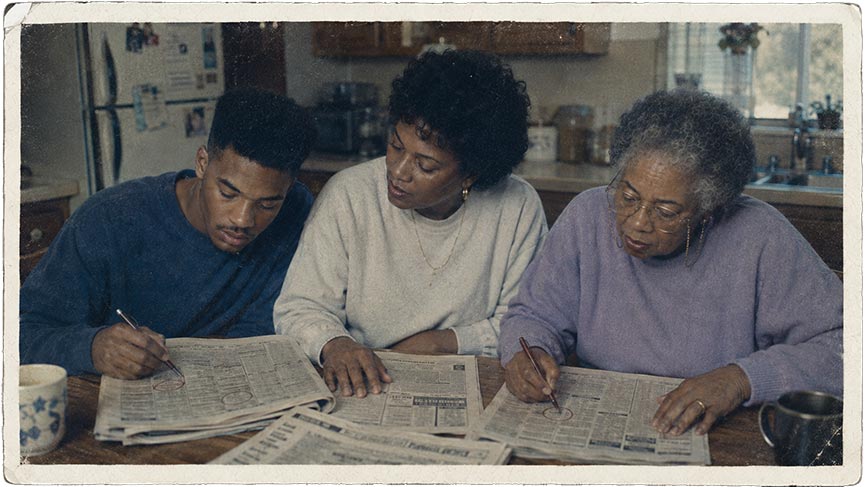
Your son is applying for his first real job. Your mom is applying for her next one. Somewhere between those two résumés is one of the biggest career opportunities of the next decade. Naturally, neither of them is looking there.
LIFE LINE
Being in the Sandwich Generation means worrying about your child’s first career and your parent’s next chapter, while knowing you cannot choose either path for them.
🥬 LETTUCE EXPLAIN: WHAT IS THE SILVER TSUNAMI AND WHY DOES IT NEED YOUR FAMIL NOW?
The Silver Tsunami describes the enormous growth of America’s older population as the Baby Boomer generation ages. By 2030, every Baby Boomer will be at least 65, creating unprecedented demand for healthcare, senior services, home support, and workers who understand aging.
That may sound only like a demographic trend, until something like happens at your kitchen table.
At 8:12 a.m., your college graduate opens the refrigerator and says he has applied to “a bunch of things.”
At 8:19 a.m., your 71-year-old mother calls.
She has been looking at her budget. Groceries cost more. Home insurance costs more. And the retirement cushion is starting to feel a lot less… cushiony.
She thinks she may need to return to work, but the truth is, part of her wants to. She misses the routine, the people, the purpose, and the feeling of being needed.
It is now 8:30 a.m., your coffee is cold, and you’ve somehow become the unofficial career counselor for two generations
Welcome to life in the Sandwich Generation: helping one generation launch its first career while helping another discover its next chapter. And if this sounds familiar, your family is far from alone.
In the first quarter of 2026, the unemployment rate for recent college graduates was about 5.7%, while 41.5% were underemployed, working in jobs that typically did not require a college degree.
Meanwhile, AARP reported that 7% of surveyed retirees had unretired, or reentered the workforce, during the previous six months. Of those returning, 48% said making money was the primary reason, while 14% said they wanted to stay active.
One generation is struggling to get started. Another is discovering that retirement may not be the permanent finish line it once appeared to be.
We recently interviewed Carly Roszkowski of AARP about unretirement and how financial pressure, purpose, and flexibility are bringing older adults back into the workforce.
Here's the surprising part:
The Silver Tsunami and America's aging population isn't just creating caregiving challenges.
It's also creating one of the biggest employment opportunities of the next decade for recent graduates, older workers returning to the workforce, and even Sandwich Generation adults looking for a career change.
The catch?
Most families don't realize how many healthcare careers exist beyond becoming a doctor or nurse.
READ OUR AARP UNRETIREMENT INTERVIEW 👆🏼
ADD YOUR VOICE
Who in your family is trying to figure out what comes next in their career?
YOUNG ADULTS: YOUR FUTURE CAREER MIGHT BE HIDING IN HEALTHCARE
As America ages, healthcare will need a new generation of workers to help people receive treatment, recover from illness, regain mobility, stay connected, and live independently and enjoy a better quality of life.
The Bureau of Labor Statistics says the healthcare and social assistance sector is projected to add roughly 2 million jobs from 2024 through 2034, more than any other industry sector. And no, young adults do not need to become a doctor or nurse to build a meaningful healthcare career.
Healthcare needs problem solvers, builders, tech enthusiasts, patient advocates, organizers, and natural connectors. It needs professionals who can fit a prosthetic limb, restore someone’s independence, analyze health data, and help a family navigate an increasingly complex healthcare system.
In other words, healthcare needs far more than stethoscopes.
These careers aren’t limited to serving older patients, but as the Silver Tsunami reshapes America, demand for many of these roles will continue to grow.
Apparently, Career Day forgot to mention half the industry. Take a look at the healthcare careers your family may not have considered yet.
OCCUPATIONAL THERAPY ASSISTANT
- In plain English: They help people relearn how to do daily life.
- National median pay: $68,340
- Projected growth: 19% by 2034
- Best for: Patient encouragers who enjoy creativity, movement, and real-world problem-solving.
Technology can recommend an exercise. It cannot stand in someone’s actual kitchen, notice what is not working, and help them regain the confidence to make breakfast safely.
HEARING AID SPECIALIST
- In plain English: They help people hear and use hearing technology successfully.
- National median pay: $61,560
- Projected growth: 18% by 2034
- Best for: Patient technology lovers who enjoy detailed work, troubleshooting, and helping people one-on-one.
HEALTH INFORMATION TECHNOLOGIST OR MEDICAL REGISTRAR
- In plain English: They make sure healthcare data does not disappear into the electronic void.
- National median pay: $67,310
- Projected growth: 15% by 2034
- Best for: Organized technology lovers who like healthcare but prefer bodily-fluid exposure near zero.
This is also a career where the work will evolve with artificial intelligence. Routine tasks may become more automated, while skills involving privacy, data quality, clinical context, and technology oversight become even more valuable.
ORTHOTIST OR PROSTHETIST
- In plain English: They build and fit devices that help people move.
- National median pay: $78,310
- Projected growth: 13% by 2034
- Best for: Builders, designers, and engineering-minded helpers who want to see the human impact of what they create.
Digital tools and 3D printing may improve how devices are designed, but someone still needs to understand the person, evaluate movement, and make the device fit an actual human body.
COMMUNITY HEALTH WORKER
- In plain English: They know where to start when everyone else has no idea whom to call.
- National median pay: $51,030
- Projected growth: 11% by 2034
- Best for: Natural connectors who understand people, communities, and how to turn a confusing resource list into actual help.
Some of these roles are excellent entry points into healthcare, while others are career paths people grow into over time. Together, they offer strong long-term opportunities for graduates interested in healthcare, business, and leadership
A STRONG LONG-TERM CAREER LADDER: HEALTHCARE MANAGEMENT
A young adult may not walk directly from graduation into managing a hospital department, but healthcare operations can be a strong long-term path.
- In plain English: They keep healthcare organizations running.
- National median pay: $117,960
- Projected growth: 23% by 2034
- Best for: Organized leaders who enjoy people, operations, budgets, and solving problems without personally drawing anyone’s blood.
This can be a useful reminder for students who like healthcare’s mission but are more interested in management, systems, or business than direct patient care.
THE SILVER TSUNAMI’S BIGGEST NEED AND ITS BIG PAY GAP
Home health and personal care aides may be the clearest example of what an aging America will need most.
These workers help older adults and people with chronic illnesses complete daily tasks, monitor changes in condition, organize appointments, prepare meals, and remain connected to their communities. Much of this work happens inside the person’s home, the exact place many older adults hope to remain.
Employment is projected to grow 17% from 2024 through 2034, with approximately 765,800 openings every year. The national median annual wage is only $34,900.
America will increasingly depend on these workers, but their compensation often does not reflect how essential their care is and that needs to change.
Head to POLICY BITES below to learn more and find ways to get involved.
National median wages are based on May 2024 data and are not starting salaries. Growth projections cover 2024 through 2034. Pay, education and licensing requirements vary by location, employer and state.
YOUR PARENTS CAN HELP THEIR OWN GENERATION
These second-act careers may be a natural fit for former teachers, nurses, HR professionals, office managers, veterans, social workers, accountants, project managers, and customer-service pros: people who already know how to organize chaos and help humans.
Aging Life Care Professionals help families coordinate care, housing, and next steps.
Patient Advocates or Care Navigators help people prepare for appointments, understand choices, and locate medical or community resources.
End-of-Life Doulas provide nonmedical practical, and emotional support to dying people and their families.
Medical and Health Services Managers oversee healthcare staff, budgets, and operations: a potentially strong second act for experienced leaders from healthcare, business, or administration.
Many of these roles involve independent work, small businesses, or demanding full-time positions. Before committing, compare training, schedule flexibility, physical demands, reliable income, and employee benefits.
Pay, education, and licensing requirements vary by role, employer, and location.
WHAT ABOUT AI?
Nothing is completely AI-proof, but careers built around hands-on care, physical presence, and professional judgment may have a stronger human advantage.
AI is becoming better at paperwork, scheduling, and documentation.
It's much worse at:
- helping someone stand after surgery
- teaching a stroke patient to cook again
- calming an anxious family
- fitting a prosthetic limb
- navigating complicated family dynamics
The more a career depends on trust, physical presence, and judgment, the more valuable humans become.
🔧GENSANDO TOOL: TELL. TEACH. CONNECT.
Healthcare offers far more career paths than most families realize. Use this simple framework to help the loved ones in your life explore opportunities they may never have considered.
TELL: Explain the need to your family: an aging America will require millions of new healthcare workers to help older adults stay healthy and independent.
TEACH: Introduce them to unique careers they may not know exist and the stability, flexibility, and purpose those jobs can offer.
CONNECT: Find someone already doing the job and ask what the work, training, and career path are really like.

1. Why am I so tired all the time in midlife? Midlife exhaustion can come from poor sleep, stress, caregiving, work demands, hormonal changes, medication side effects, or health conditions such as anemia or thyroid problems. Talk with a healthcare professional if the fatigue is persistent, worsening, or interfering with daily life.
2. How do I talk to aging parents about driving? Choose a calm moment and focus on specific concerns, such as accidents, getting lost, slower reactions, or vision changes. Involve a healthcare professional or driving-evaluation specialist when possible, and discuss transportation alternatives before taking away the keys.
3. How do I handle sibling dynamics when caring for aging parents? Start by listing the actual caregiving work, including appointments, finances, errands, research, emotional support, and emergency availability. Divide responsibilities based on time, skills, location, and financial capacity rather than assuming the nearest sibling will quietly become the entire care plan.
4. How do I become the Family CFO for my aging parents? Create a simple financial inventory with income, bills, insurance policies, debts, benefits, account contacts, and important document locations. Involve your parent whenever possible, and make sure the proper legal permissions are in place before accessing or managing accounts.
5. How do I manage Family IT for kids and aging parents? Create a family technology plan with strong passwords, multifactor authentication, recovery information, scam rules, purchase controls, and trusted people to call before clicking suspicious links.
6. What do I do when an aging parent refuses help? Ask what they are afraid of losing: privacy, control, money, independence, or dignity. Offer smaller choices, involve trusted professionals, and frame support as a way to help them remain independent longer.
“Let me help you stay in charge” usually works better than “We need to talk about your situation.”
📼 VHS VIBES
Your family member may not become Doogie Howser, but this ‘90s prodigy reminds us that healthcare has always been more than a job, it’s a calling! 🏥👨🏼⚕️ Doogie Howser MD Trailer
.png)
- GenSando’s Ultimate Survival Kit (GenSando)
- Influencers Give Seniors Chance to Relive Their Best Memories (People Magazine)
- I swapped places with my sister to care for our aging parents during her well-earned vacation. I made a rookie mistake. (Business Insider)
- Estrogen Shortage (GenSando)
- July 23rd was Gorgeous Grandma Day! (National Day Calendar)
- Yale Study Says You Can Actually Get Better With Age (VeryWell Health)
- From Double Shots to Dance Breaks: Creative Ways to Stay Energized (GenSando)
POLICY BITES FOR FAMILY CAREGIVERS
Go-to resources serving up small bites of caregiving policy, proposals, and politics that matter to Sandwich Generation families.
- NDWA Celebrates Introduction of Fair Wages for Home Care Workers Act
- AARP’s Action Alert and Advocacy
- Caregiver Action Network Help Desk
- National Alliance for Caregiving
- US Aging Action Alerts
WOW PICKS: FIND YOUR NEXT MOVE
My Next Move is a free U.S. Department of Labor career tool that connects your interests with possible occupations, training requirements, and career paths. It works for recent graduates, parents returning to work, and anyone in midlife wondering what’s next.
EXPLORE CAREERS WITH THE INTEREST PROFILER 👆🏼
WE’RE GRATEFUL!
Thank you to the GenSando community members contributing to this movement and helping us build practical tools and resources for the Sandwich Generation and family caregivers.
We welcome collaboration, partnership ideas, and guest articles. Contact Nick Papadopoulos at team@gensando.com 📧

FULL MENU. EXTRA SAUCE.
We see you.
We get you.
And we’re right here with you.
Real stories. Practical tools. Trusted resources. Community support. And a few laughs when you need them most.
Share this article with a parent helping more than one generation figure out what comes next.
SOURCES & RECEIPTS
- Federal Reserve Bank of New York: The Labor Market for Recent College Graduates
- AARP: Retirement on Pause—High Costs Push Older Americans Back to Work
- U.S. Census Bureau: Demographic Turning Points for the United States
- U.S. Bureau of Labor Statistics: 2024–2034 Employment Projections
- U.S. Bureau of Labor Statistics: Occupational Outlook Handbook—Healthcare
- OECD: Digital and AI Skills in Health Occupations
- National Institute on Aging: Cognitive Health and Older Adults
- Medicare.gov: Employer Coverage and Medicare Enrollment
TOPICS COVERED
Hidden healthcare careers, recent graduate unemployment, college underemployment, student loans, unretirement, older workers, healthcare salaries, AI-resilient careers, aging-services jobs, employee benefits, meaningful work, empty-nest transitions and Sandwich Generation financial stress.
Spotlight





SUBSCRIBE TO
GenSando
Delivered weekly.