.svg)

Sleep Like a Rockstar - The 3-2-1 of Small Changes You Can Make Today
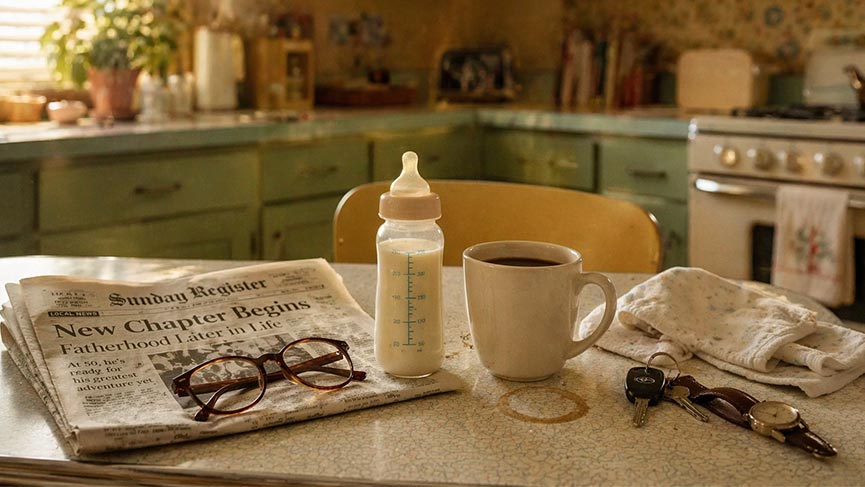
John O’Malley, founder of Raise Wellness, shares a simple, no-cost protocol for busy parents to master sleep and longevity.
I became a new dad at 50.
I took on this new role with no onboarding and a steep learning curve without complaint.
On top of that, juggling clients, family logistics on different continents, and the quiet realization that a very small human now outranked me in the household hierarchy of needs.
The non-negotiable parts are that there is no pause button, no days off, and Finnegan’s (our son) needs are more immediate.
The first casualty wasn't my sanity, patience, or hairline.
It was sleep.
Or more accurately, the elusiveness of it.
There’s nothing like a 3:37am kick to the face from your co-sleeping toddler to make any alarm clock feel like a polite suggestion.
Which is unfortunate as a wellness coach, as I am very aware that sleep solidly sits at the top of the health pyramid.
Sleep is the one lever that influences nearly everything: how you look, how you feel, how you think, how you perform, and how long you live.
If you want to improve productivity, athletic performance, or creativity, sleep is a relatively simple and impactful place to start.
During sleep your brain is running one of the most sophisticated repair programs known to biology: memory consolidation, hormone regulation, immune system optimization, and tissue repair.
Miss enough sleep, and the wheels start coming off.
And the irony? It doesn’t cost much, if anything. You may even save money.
Most people don’t need a $4,000 biohacking mattress, twelve supplements, or a Himalayan sleep cave.
A few small habits will get you 80% of the way there.
Here are some fast, cheap, and surprisingly effective ways to improve your sleep, tonight.
1. The 3-2-1 Rule (Wind-Down Protocol)
- 3 hours before bed – stop eating
- 2 hours before bed – reduce liquids
- 1 hour before bed – turn off screens
Why?
Late meals keep digestion active when your body should be winding down.
Excess fluids trigger midnight bathroom trips. Those after-dinner Negronis unfortunately don’t help either.
Screens blast blue light into your eyes, telling your brain it’s time to pre-party in Ibiza and delaying melatonin, the sleep hormone.
2. Tailor a 30–60 Minute Bedtime Routine
Your brain doesn’t like abrupt transitions. You can’t go from inbox insurance, another unsolicited WhatsApp group, and geopolitical doomscrolling straight into a deep sleep state.
Create a short wind-down routine:
- Dim the lights
- Lower the temperature
- Light stretching or mobility work
- Meditation or slow breathing
- Read a physical book that’s not too stimulating, or a Kindle, in my case
- Journal today’s achievements, pet peeves, and maybe tomorrow’s not to-do list
This signals to your nervous system that the day is finished, random thoughts have been filed away, and it’s safe to power down.
Consistency matters more than perfection.
3. Your Bed is for Two Things:
- Sleep.
- And… well… you know…
That’s it.
Banging out a few quick emails, pounding that rage-bait, and watching Ms. Rachel in bed trains your brain to associate your sanctuary with wakefulness.
Your brain loves patterns. Protect this one.
Bonus rule: No electronics in the bedroom and maybe turn your alarm clock so it faces the wall.
4. Make Your Bedroom Uneventful
This relates to Sleep Hygiene, not that cordless Dyson vacuum I have been secretly coveting
The perfect sleep environment is:
- Dark
- Cool
- Quiet
Small adjustments can dramatically improve sleep quality:
- Blackout curtains, likely the best investment we made
- Eye mask
- White noise, a fan, or earplugs
- Temperature around 65–68°F (or 18–20°C for the other 96%)
You want your bedroom to feel like a retreat designed by antisocial agoraphobioc Scandinavian monks.
5. A Little Something To Help You Relax?
Many cultures use evening teas to signal bedtime.
A few good options:
- Chamomile tea
- Warm herbal blends like lemon balm, valerian, and passion fruit flower.
I take Magnesium Glycinate capsules to calm the nervous system and relax muscles.
Avoid sedatives like Ambien, they put you into a sleep feedback loop that looks like rest but performs like a death spiral.
6. Keep Your Sleep Schedule Boringly Consistent
- The body runs on circadian rhythm, a 24-hour internal clock governed by light and habit.
- Going to bed at wildly different times, like a freshman on spring break, confuses the system.
- Try to keep your bedtime and wake time roughly the same every day, including weekends.
Your brain loves rhythm.
7. Aim for a Consistent 7–9 Hours of Quality Sleep (Seriously)
The cultural badge of honor around “I only need to sleep five hours” is nonsense, delusional, and counterproductive. And yes, there are many studies to prove this.
Adults consistently getting less than 6 hours of sleep show measurable declines in:
- Cognitive performance
- Hormone balance
- Immune function
Most people function best with 7–9 hours.
You can’t hack, power through, or pull a fast one on biology sustainably.
8. The Long Game: Sleep = Longevity
If you zoom out, sleep is less about tonight and more about the quality of the decades to come.
Better sleep is linked to:
- Lower risk of heart disease
- Improved metabolic health
- Reduced risk of Alzheimer’s
In short:
Better sleep = longer, healthier, and a more balanced life.
A Simple Starting Point
If this feels like a lot, don’t overcomplicate it.
Start with three things tonight:
- Follow the 3-2-1 rule
- Create a 30-minute wind-down routine and set an alarm reminder.
- Keep your bedroom dark, cool, and quiet
That alone will dramatically improve sleep for most people.
I often tell friends and clients:
Train consistently, eat mindfully, and sleep like your life depends on it.
Sleep well, your future self will thank you.
If you want to go deeper, you can learn more below.
I offer a limited number of 30-minute strategy calls for the GenSando community. Clear insight. Honest feedback. A practical plan. Time well spent. https://www.johnomalley.co/
— John.
Enjoyed this article? Join the GenSando family.
👆🏼 Subscribe to our newsletter for relatable stories, helpful tools, and a community that truly gets it.
Spotlight





SUBSCRIBE TO
GenSando
Delivered weekly.