.svg)

Alzheimer’s Caregiving: You Can’t Be the Whole Care Plan

When love, logistics, memory, and grief all need room in the care plan.
📸 WHY THIS PHOTO?
Real families. Real memories. Real life.
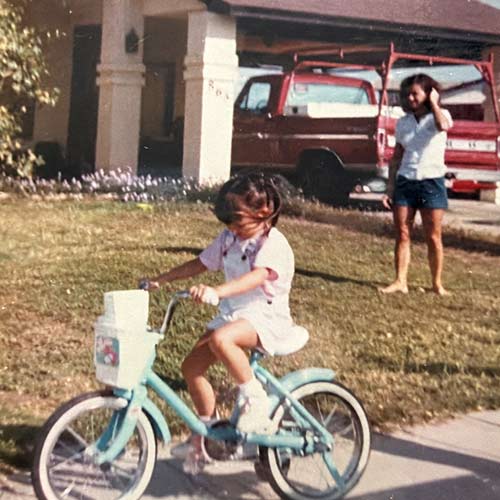
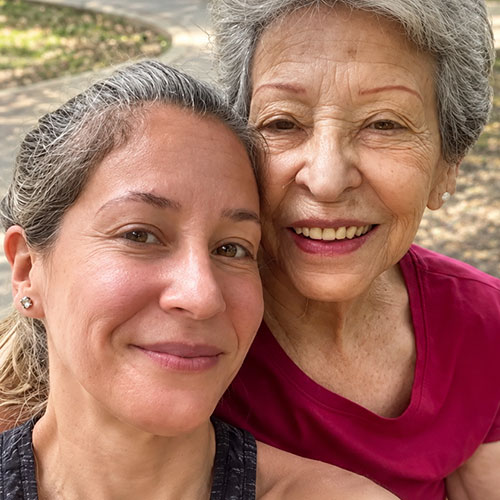
“This is my mom, Teresa, 84, living with dementia since 2019. I share her care with two of my sisters. On days like this, doing things she loves, like walks among flowers, are ours. She may not remember them tomorrow, but the joy is real today, and I get to keep it.”
— Alex, Social Media
😂 LAUGH LINE
Supporting someone you love through Alzheimer’s or dementia holds so much tenderness. There are also 47 sticky notes and absolutely no idea where you put the pen.
🥬 LETTUCE EXPLAIN: WHAT DOES ALZHEIMER’S AND DEMENTIA CAREGIVING REALLY ASK OF FAMILIES?
Alzheimer’s affects more than memory. It can change thinking, communication, judgment, behavior, and the ability to manage everyday life. And as those things change, family life changes with them.
At first, helping may look small. A reminder. A ride to the doctor. A prescription pickup. A meal.
Then there is everything underneath.
Remembering what the doctor said. Noticing that Dad becomes more confused in the evening. Figuring out whether Mom can still manage the bills. Updating your siblings. Finding the legal documents. Watching the front door. Answering the same question again without letting your exhaustion answer for you.
Somewhere between the reminders and the appointments, you begin carrying pieces of their world for them.
And the weight isn’t only in what you do.
It’s staying alert for what might happen next. Making decisions you never expected to make. Grieving what is changing while still loving the person right in front of you. Trying to protect their dignity while quietly wondering how long you can keep doing all of this.
The work follows you even when you aren’t physically there.
Nearly 13 million Americans provide unpaid care for someone with Alzheimer’s or another dementia, contributing more than 19 billion hours of unpaid care in 2025.
Behind those hours are weary families holding tightly to the people they love, searching for answers, piecing together care, and trying to find moments of joy in a season that asks so much.
September is World Alzheimer’s Month, and Alzheimer’s Disease International is using its 2026 campaign to emphasize how much an early diagnosis can matter. Knowing earlier can give families more time to understand what’s happening, find support, make plans, and include their loved one in decisions about the future.
But for many families reading this, the diagnosis has already come.
Now the question is: How do we live with it?
And if it isn’t Alzheimer’s, it may be another form of dementia, such as Lewy body, vascular, or frontotemporal dementia. The diagnosis may differ, but many of the demands placed on families can feel painfully familiar.
YOU MAY BE NOTICING...
- Your parent asks the same question several times, and your patience runs out before your love does.
- Medications, appointments, bills, meals, safety, and paperwork are being managed by one increasingly exhausted person.
- One sibling gets every update while another has somehow remained blissfully “out of the loop.”
- What began as “helping Mom out a little” has quietly become a second job.
- You are grieving changes in your parent while they are still very much here.
- You feel guilty when you are frustrated, and frustrated that you feel guilty.
- You spend so much time anticipating everyone else’s needs that you can barely hear your own.
Has the care gradually expanded until it is taking up more of your time, energy, your relationships, and sometimes even your sense of who you are?
And this, my friends, is the Sandwich Generation: one eye on your child’s calendar, one eye on your parent’s safety, and approximately zero eyes available for your own life.
OKAY, YOU’VE BECOME THE CARE PLAN. NOW WHAT?
First: stop treating the entire list like one person’s job.
In our GenSando Q&A with Anurag Gupta, MD, CEO and founder of Tembo Health, he offered families a practical place to begin: clarity.
Whether the diagnosis is Alzheimer’s or another form of dementia, Dr. Gupta recommends focusing on three priorities:
- Establish care with a clinician or team experienced in Alzheimer’s and dementia care.
- Understand the specific diagnosis, including its type and stage.
- Build a support system to help your loved one and family navigate decisions and next steps.
As he put it: “Caregiving is a team sport, and your loved one is part of that team.”
Now make the care visible.
Write down what is actually being managed:
- Appointments. Medications. Meals. Transportation. Bills. Legal paperwork. Home safety. Check-ins. Emergency backup. Respite.
- Then put a name beside each one. That name might belong to a sibling, friend, clinician, care navigator, community program, or paid provider.
If one person’s name appears beside everything, you haven’t built a care team yet.
You’ve built a burnout plan.
Caregiving already comes with enough muddy water. This is the time for clear asks.
Instead of: “Let me know if you need anything.”
Try: “Can you take Mom to her second Tuesday appointment every month?”
Or: “Can you handle the pharmacy calls and refill tracking?”
Or: “I’ll coordinate Dad’s medical appointments. Can you take over the bills?”
Clear asks give people something specific to own and give the primary caregiver one less thing to carry.
Dr. Gupta recommends building support early through family, clinicians, care navigators, community programs, and respite services. The National Institute on Aging also encourages early legal, financial, healthcare, and long-term care planning while your parent can still participate.
Planning early isn’t taking away their control. It helps protect their voice.
You can be part of the care plan without becoming the whole care plan.
And if you’re sitting there thinking, Okay, but what do I actually DO when Mom asks me the same question for the fourteenth time? We found someone worth knowing.
⭐ WOW PICK: DEMENTIA CAREBLAZERS
Natali Edmonds, PsyD, ABPP, is a board-certified geropsychologist, former family caregiver, and founder of Dementia Careblazers.
Her work focuses on the moments families actually struggle with: behavior changes, communication, safety, overwhelm, and the question every caregiver eventually asks:
“What am I supposed to do here?”
She brings both clinical expertise and lived caregiving experience, with practical guidance designed specifically for families navigating dementia.
Need help with communication, behavior, safety, or caregiver overwhelm?
GET PRACTICAL HELP FOR THE HARD EVERYDAY MOMENTS 👆🏼
And because we want to know what’s actually consuming the most brain space...
ADD YOUR VOICE
Which part of dementia caregiving is taking up the most brain space right now?
TAP YOUR ANSWER 👆🏼
Your answers help shape future GenSando stories, tools, and resources.
And for a little throwback...
📼 VHS VIBES
KODAK — “TIMES OF YOUR LIFE”
Remember when family photos didn’t live in the cloud?
Kodak’s “Times of Your Life” campaign was built around something that hits a little differently when a family is facing Alzheimer’s or another dementia: our desire to hold onto the moments and people that matter.
🧊GENSANDO TOOL

Do I call the doctor? Ask my sibling for help? Find the legal paperwork? Look into respite care?
And... freeze.
The FREE Decision Fatigue Reset Tool is for the moment when you know something needs to happen, but you can’t decide what to do first. This isn’t about organizing the entire care plan. It’s about choosing one next action and getting it into motion.

Alzheimer’s & Dementia Caregiving: How Do I Include My Parent in Decisions as Their Memory Changes?
Keep speaking directly to your parent, not only about them. Offer clear choices, allow extra time for answers, and involve them in decisions they can still make. Their ability to participate may change over time, but their preferences, dignity, and sense of control still matter.
Alzheimer’s & Dementia Caregiving: How Should I Respond When My Parent Repeats Questions or Becomes Confused?
Try not to turn every moment into a fact-checking competition.
Speak calmly, reduce distractions, and try rephrasing rather than repeatedly correcting. Redirection, a familiar activity, a snack, a walk, music, or another comforting activity may help depending on the person and situation.
Family CFO: What Financial and Legal Information Should I Know About My Aging Parents?
Start with the basics: where important documents are stored, who has financial and healthcare power of attorney, what insurance coverage exists, and how to access essential accounts in an emergency. You do not have to solve every future expense today. Start by knowing what exists and who has the authority to act.
Midlife Mogul: What Workplace Support Should I Ask About While Caregiving?
Ask about flexible scheduling, family-leave policies, remote-work options, employee-assistance programs, caregiver benefits, and backup-care resources. You do not need to share every family detail to ask what support is available.
Family IT: What Technology Can Make Life Easier for an Aging Parent?
Depending on your parent’s needs, medication reminders, shared calendars, grocery delivery, video doorbells, emergency-response systems, smart lighting, and simplified communication devices may help.
Marriage: How Do We Stay Connected When So Much of Our Energy Goes to Everyone Else?
Do not wait for a perfectly open weekend and matching energy levels. It may never come.
Connection can look like coffee before the house wakes up, a walk after dinner, watching one show together, or spending ten uninterrupted minutes talking about something other than kids, parents, appointments, and logistics.
.png)
- Aging Parents and Road Trips: When Family Travel Changes — GenSando
- Returning to Ourselves Through the Midlife Caregiving Journey — GenSando, Kim Richards
- What Dolly Parton Said in Her Last Interview Should Terrify Us — TIME
- What’s So Funny About Menopause? — Poise
- How to Keep Your Marriage Strong While Caregiving — AARP
- Four Rules for Adult Children Living at Home — Fidelity
POLICY BITES FOR FAMILY CAREGIVERS
Memory care depends on more than what happens inside one family.
If you want to follow the bigger caregiving picture, these organizations track issues affecting family caregivers:
- Ways You Can Be an Advocate With AARP — AARP
- Fair Wages for Home Care Workers Act — National Domestic Workers Alliance
- National Caregiver Help Desk — Caregiver Action Network
- 2026 Policy Agenda — National Alliance for Caregiving
- Advocacy Alerts — USAging
FROM OUR SANDWICH TO YOURS
Thank you to the GenSando community members, experts, and partners helping us build practical resources for the Sandwich Generation.
We see you. We get you. And we’re right here with real stories, practical tools, trusted resources, and a few laughs when the situation lets us have one.
Have a story, partnership idea, or guest article? Contact Nick Papadopoulos at team@gensando.com 📧
Know someone caring for a parent with Alzheimer’s or another dementia? Pass this along. Sometimes the most useful message is simply: “You should not have to figure all of this out alone.”
SOURCES & RECEIPTS
- Alzheimer’s Association: 2026 Alzheimer’s Disease Facts and Figures
- Alzheimer’s Association: Sandwich Generation Caregivers
- National Institute on Aging: Understanding Different Types of Dementia
- National Institute on Aging: Alzheimer’s Caregiving
- National Institute on Aging: Next Steps After an Alzheimer’s Diagnosis
- National Institute on Aging: Planning After a Dementia Diagnosis
- National Institute on Aging: Alzheimer’s Caregiving — Caring for Yourself
- National Institute on Aging: Communicating With Someone Who Has Alzheimer’s Disease
- National Institute on Aging: Getting Help With Alzheimer’s Caregiving
- National Institute on Aging: Adapting Activities for People With Alzheimer’s Disease
- Alzheimer’s Association: 24/7 Alzheimer’s & Dementia Helpline
- Alzheimer’s Disease International: World Alzheimer’s Month 2026
- Dementia Careblazers: Natali Edmonds, PsyD, ABPP
♥️LIFE LINE
You can hold onto someone you love without being the only person holding everything together.
LOOK AT YOU, READING TO THE BOTTOM.

You’re our favorite. Don’t tell the others.
When you need to step back and look at everything you’re carrying, our free 10-Minute Sandwich Generation Reset Guide can help.
Use it to sort what needs your attention, what someone else can handle, and what can wait.
TOPICS COVERED
Alzheimer’s caregiving, dementia caregiving, memory-related care, caring for a parent with Alzheimer’s, caring for a parent with memory loss, Sandwich Generation caregivers, Lewy body dementia, vascular dementia, frontotemporal dementia, dementia caregiver stress, Alzheimer’s communication, dementia safety, legal planning for dementia, financial planning for aging parents, caregiver respite, family caregiving responsibilities, caregiver burnout, and World Alzheimer’s Month.
Spotlight






SUBSCRIBE TO
GenSando
Delivered weekly.