63 Million Caregivers. One Big Takeover.
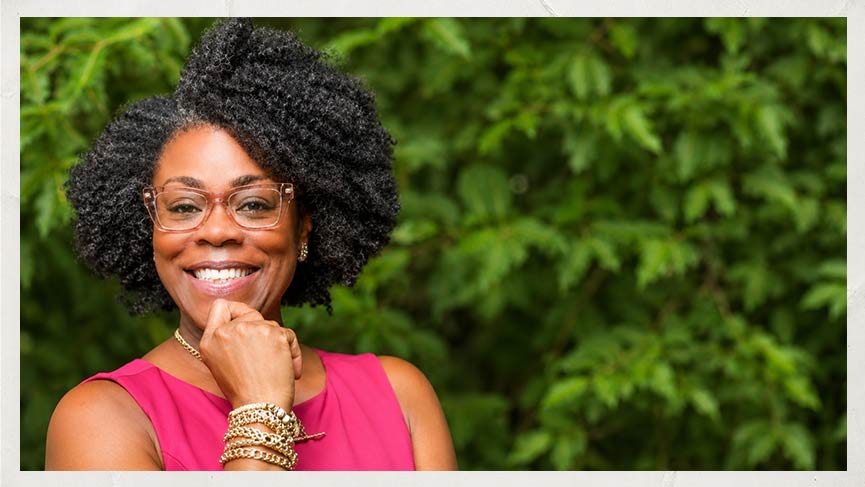
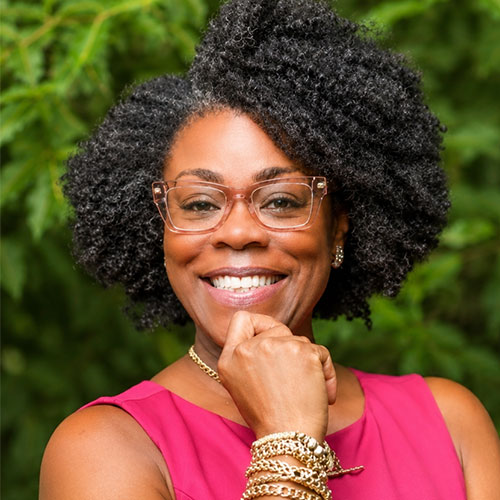
Shanna Hawes, Certified Senior Advisor (CSA)®
🥪 A GenSando Thanksgiving Week Takeover
As National Family Caregivers Month comes to a close, we're handing the microphone to someone who knows this role firsthand.
Meet Shanna Hawes, a Certified Senior Advisor, writer behind GenX.InTheMiddle, and GenSando collaborator. She's navigating care for two parents across two states, while giving a voice to experiences that don't always fit neatly into caregiving statistics.
Her latest piece, The Month They Finally Noticed, asks an important question: What if all 63 million family caregivers told their stories?
We think that's a question worth asking. And listening to.
So this week, we're sharing Shanna's article in her own words. Take it away, Shanna.
The Month They Finally Noticed
A GenX.InTheMiddle check-in — not a numbered Article, just a pause
By Shanna Hawes, Certified Senior Advisor (CSA)®
November is National Family Caregivers Month. It has been since 1997, when a president signed a proclamation most of us never heard about, for a job most of us never applied for.
I want to be honest about how that lands for me. It's not nothing. It's also not much. A month doesn't cover respite care, or sit in the waiting room, or remember which pharmacy has which formulary. But it's a pause, and I don't get many of those, so I'm taking this one.
Here's why this series exists in the first place: I went looking for my story and couldn't find it. Two divorced parents, two states, two healthcare systems, one daughter in the middle. Not in the research. Not in the articles. Not in the brochures at the hospital. So, on July 13, I stopped looking and published "I Went Looking for My Story."
Stevie Wonder's "Living for the City" tells a whole family's life in about seven minutes: people doing everything right inside a system that never notices them. I couldn't find my version of that story anywhere. So I'm writing it, one piece at a time.
Nine articles since that debut, here's what I've said:
That two parents in two states, with two portals, two pharmacies, and two discharge planners who've never heard of each other, add up to a full-time job nobody puts on a resume.
That when two people stop speaking to each other, the one in the middle doesn't stand at a point of the triangle. She becomes every side of it.
That nobody held a ceremony to make me the eldest daughter. The job just kept landing in my lap until it was mine.
That the scam calls never stop, and neither, apparently, do I.
That the power of attorney signed on a boring day in April 2021 quietly did its job twice, once for an apartment, once for a hospitalization, before anyone knew it would need to.
That some of what I carry, I hold and repeat to no one, not because it isn't true, but because saying it never once made anyone's discharge go smoother.
That betting on myself, professionally, in the exact middle of someone else's medical crisis, was less reckless than it looked from the outside.
That the Medicaid process runs on paperwork nobody warns you about, and doing it right the first time still doesn't guarantee it goes right.
And that I'm not sandwiched between generations the way the research describes it. I'm surrounded, by a son who's a pillar, not a dependent, and by a husband who's never once been counted in a caregiving study, even though he carries half the load.
That's the series so far. Nine different rooms, one person walking between all of them.
What This Month Actually Recognizes
Here's a number worth sitting with: There are an estimated 63 million family caregivers in the U.S. right now. That's about one in four adults. The unpaid care adds up to more than $1 trillion a year, more than the entire country spends on Medicaid. Most of them are doing this on top of a job. Most of them didn't apply for the position either.
I don't say that to make my version of it sound smaller. I say it because I spent the first four pieces of this series making the case that the data doesn't have a line for what I do, two states, two households, no shared infrastructure. That's still true. But this month is also a reminder that the data doesn't have a line for most of us, in our own specific ways. The shape of the gap is different for everyone. The gap itself is nearly universal.
Rose Royce told us to keep wishing on that star. I've never been much of a wisher. But I'll take a month.
What If All 63 Million of Us Told It?
I keep coming back to one question, and I don't have the answer to it.
What would it look like if every one of those 63 million people had the chance to tell their caregiving story out loud? Not statistics. Not a survey checkbox. The whole thing, the 911 calls, the discharge that happened too fast, the job that didn't survive it, the parent who doesn't recognize what you gave up.
Donny Hathaway called it "Voices Inside." That's where most caregiver stories live. Inside. In the car after the appointment, in the kitchen at midnight, in the group text nobody else is on.
Is there power in that many voices? I think there must be. Sixty-three million is not a niche. It's a voting bloc that hasn't figured out it's a voting bloc yet.
Al Green meant "Let's Stay Together" as a love song. Read the title again as an organizing strategy. It still works.
And the people who count votes are starting to notice. In an AARP poll released just last month, 77 percent of likely voters 50 and older in the country's tightest House races said they'd be more likely to support a candidate who backed a tax credit for unpaid family caregivers. Half of the voters in that age group are current or former caregivers themselves. That's not a sympathy number. That's a math problem for anyone running for office.
So, what would politicians respond to? Numbers, yes. But numbers have been around for a while. I think what moves them is the number with a face on it. A story they can't unhear. A constituent who shows up with her binder.
Stevie Wonder released "You Haven't Done Nothin'" in 1974, aimed squarely at Washington. Half a century later, it still fits whoever happens to be in office. That's not a partisan statement. That's a timeline.
There's proof that it works slowly. A New Jersey senator who is himself caring for a father with Alzheimer's and two young sons introduced a bipartisan bill this spring, the Multigenerational Caregiving Data Act, because federal surveys don't even ask whether you're caring for more than one generation and they especially miss care that crosses households. Read that again. Congress is just now proposing to add the question. That's how invisible we've been. It's also proof that one caregiver telling the truth in the right room can put the question on the table.
The Staple Singers sang about a "Long Walk to D.C." in 1968. My son lives there now. These days, some of us make that walk with a story form on a senator's website instead of our feet. It counts.
For My Generation or the Next?
Here's the part I must be honest about: policy moves at the speed of paperwork, and I've written an entire article about how fast paperwork moves.
The RAISE Family Caregivers Act became law in January 2018. It asked for a national strategy to support family caregivers. The strategy arrived in September 2022. That's four and a half years to produce a plan, not a check, not a respite program in my county, a plan. Meanwhile, the Credit for Caring Act, which would give working caregivers a tax credit of up to $5,000, has been introduced with support from both parties in Congress after Congress. It still hasn't passed.
New Birth said, "It's Been a Long Time." They were singing about a lover, not a tax credit. The feeling translates.
So, will policies change? I believe they will. In time for me? Maybe some of them. In time for my son, if he ends up in my seat? That's the generation I'm really advocating for. Gen X is caring for the Boomers with almost no infrastructure. If we press hard enough now, the people caring for us might inherit something better than a three-ring binder and a prayer.
What would caregiving look like if our collective voices were heard? I picture it like this: a discharge planner who asks who's at home before the wheels are rolling. An employer who treats a parent's hospitalization like the emergency it is. A Medicaid application that doesn't require a specialist to translate. A survey with a line for the daughter driving between two states. None of that is radical. All of it is missing.
I don't have the answers. But I'm proposing we keep pressing forward anyway, because nobody is going to hand them to us.
The Ohio Players had a song called "I Want to Be Free." I don't want to be free of my parents. I want the next caregiver to be free of the maze. That's a different thing, and it's worth pressing for.
Notes from the Point
If you want your story to count, here's where to start:
Write it down. It doesn't have to be a Substack. A page in a notebook counts. You can't share what you haven't named.
Send it to your elected officials. Senators and representatives have story forms on their websites, and their staff do read them. Tell them what you need, not just what you've survived.
Answer the surveys. When AARP, the National Alliance for Caregiving, or your local Area Agency on Aging asks caregivers to weigh in, say yes. That's how the numbers get made.
Tell your employer. Ask what caregiving benefits exist. If the answer is "none," that's data too.
Find your people. A caregiver group, an online community, a table at a local event. Stories get louder in a room.
James Brown put out "Get Up, Get Into It, Get Involved" in 1970. Fifty-six years later, it's still better advocacy advice than most agency websites.
Are You Prepared?
Former First Lady Rosalynn Carter said it better than anyone: there are only four kinds of people in this world: those who have been caregivers, those who are caregivers now, those who will be, and those who will need one.
Notice there isn't a fifth category. There's no "people this won't happen to."
So, I'll ask you the question nobody asked me in time: are you prepared? Not for your parents. For you. Who's your person? Have you told them what you want? Is your own power of attorney signed, or are you assuming someone will figure it out? My father's was signed on a boring day in April 2021. It was the best boring day we ever had.
Aretha told us to "Think." She was talking to a man who'd taken her for granted. I'm talking to you about your own paperwork. Same energy.
You will be the caregiver, the one cared for, or both. The only choice you get is whether you see it coming.
Curtis Mayfield wrote "People Get Ready" about a train that's coming whether you've got a ticket or not.
Caregiving runs on the same schedule.
What I'm Actually Grateful For
Not the proclamation. The people.
My husband, who has been the backbone of every piece in this series whether I named him or not, and who finally got his due in the last one.
My son, who is exactly the pillar I said he was and not one bit the dependent the research assumes.
Enchantment, "It's You That I Need." Two men, one title, no further explanation required.
And you, whoever is reading this, ten pieces in, still here. If one of these landed harder than the others, I'd genuinely like to know which one. Better yet, tell me your story. Drop it in the comments or just reply to this email. I read every one. Sixty-three million voices start with one.
Bobby Womack, "That's the Way I Feel About Cha." That one's for you, reader.
What's Next
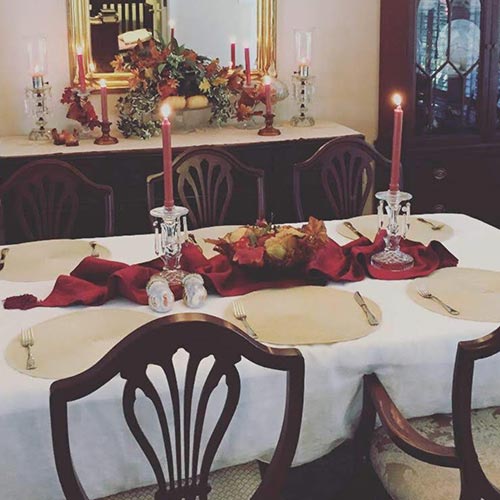
The next piece is about a holiday I'm apparently supposed to love and mostly don't, and why that's finally okay with me. No custody battle. No two dinners to coordinate. Just permission, which turns out to be its own kind of legal document — the kind nobody has to notarize.
See you in two weeks.
Shanna Hawes is a Certified Senior Advisor (CSA)® and a card-carrying member of the Sandwich Generation, managing care for both parents across two states - and this November, joining 63 million other people the calendar finally decided to notice.
From the stories to the songs: Shanna has woven music throughout her caregiving journey. Here is the soundtrack behind the words.
📼 VHS VIBES: SHANNA'S CAREGIVING SOUNDTRACK
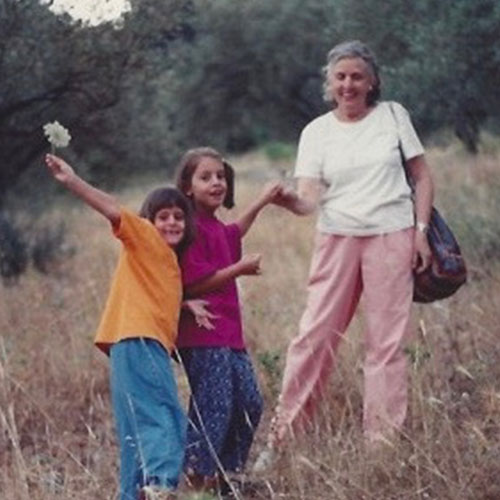
We're trading VHS clips for music tracks this week! Because apparently, even caregiving needs a playlist.
And Shanna understood the assignment.
She's sharing the music that's accompanied her caregiving journey, featuring Stevie Wonder, Aretha Franklin, Al Green, James Brown, and more.
Shanna’s story is also a reminder of the people who quietly help us carry the load. This Thanksgiving, we have a little something for them.
🔧 THE GENSANDO TOOL: THANK YOU FOR SHOWING UP
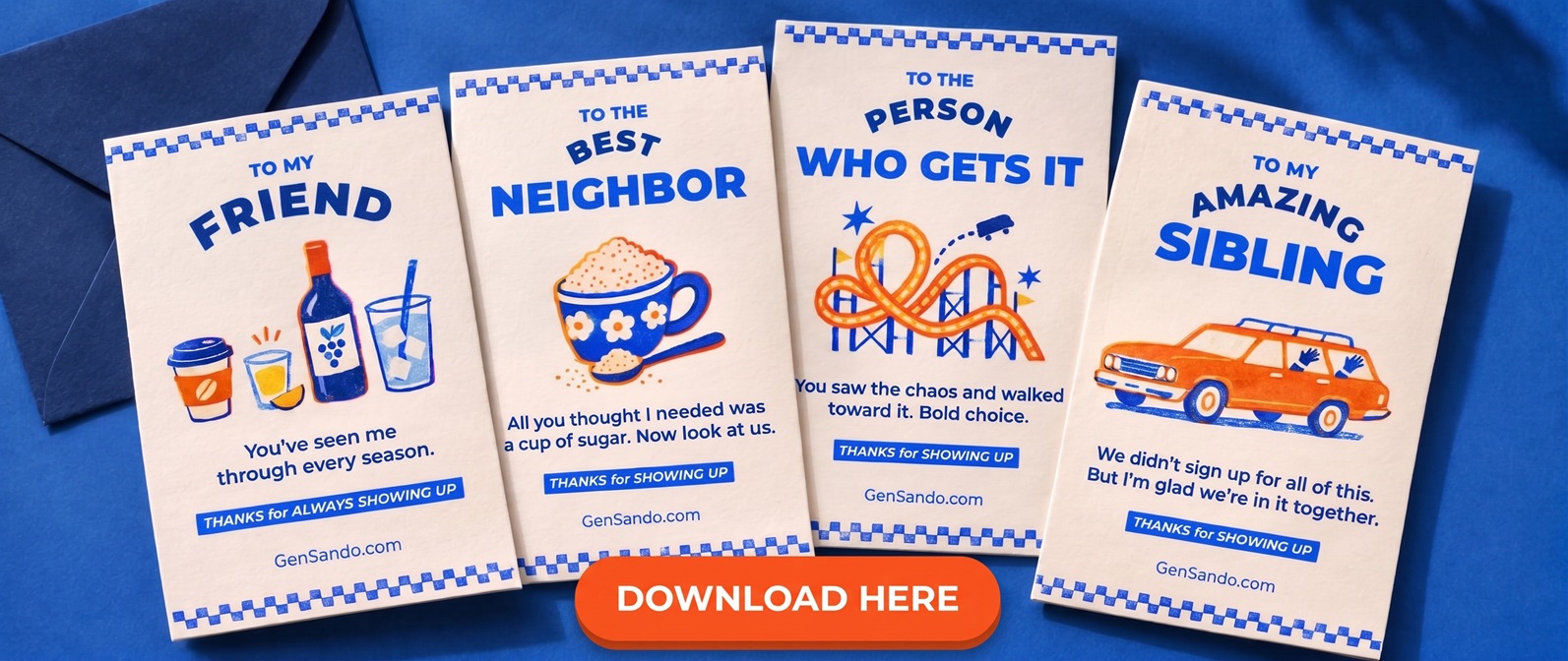
Our Thanksgiving gift to the GenSando community: four free thank-you cards, a little funny and a little heartfelt, for the people who make life easier.
Download, save to your camera roll, text a card, or share it on social media. Tag someone who showed up for you, and tag GenSando, too. No shopping. No spending. Just gratitude. Shanna’s story reminds us that the best caregiving tools start by listening to real people.
🥪 CAN WE BORROW YOUR SANDWICH GENERATION BRAIN?
At GenSando, we're building an app to make everyday family caregiving easier. But we don't want to guess what you need. We want you to tell us.
Try our app for FREE. Tell us what works, what doesn’t, and what would actually help. No tech expertise required. Just real-life caregiving experience.
EMAIL US AND SAY YES → Nick@gensando.com
🥪FROM OUR SANDWICH TO YOURS
National Family Caregivers Month may be coming to an end, but your stories, challenges, and contributions deserve attention every month of the year. Thank you to Shanna for helping us amplify those voices. And thank you to everyone who keeps showing up, even when nobody's handing out awards. Or snacks.
Same love. Smarter support. The GenSando Team
❤️ LIFE LINE
Your Story Matters.
63 million caregivers. 63 million stories worth hearing. Because every voice has the power to make a difference.
LOOK AT YOU, READING TO THE BOTTOM

You're our favorite. Don't tell the others. Our free 10-Minute Sandwich Generation Reset Guide can help you figure out what needs attention, what someone else can handle, and what can wait.
📚 SOURCES & RECEIPTS
- Shanna Spotify playlist
- AARP & NAC: Caregiving in the U.S. 2025
- AARP: Valuing the Invaluable 2026
- AARP: 2026 Midterm Election Poll
- Senator Andy Kim: Multigenerational Caregiving Data Act
- ACL: National Caregiving Strategy
- AARP: Credit for Caring Act
Guest Contributor Note:
Any views expressed in articles are the personal opinions of the experts named.
Spotlight




SUBSCRIBE TO
GenSando
Delivered weekly.