.svg)

When “Shift” Hits the Fan: Where’s the Balance Now?
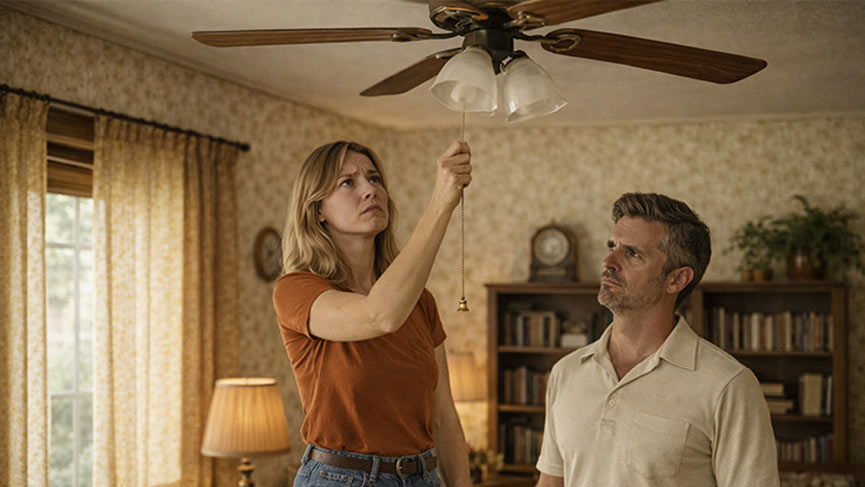
Marriage, caregiving, and the invisible roles couples drift into.
Editor’s Note
My husband is great at the hard conversations, the ones that require honesty and calm. I’m the logistics department, keeping the calendars, appointments, and puzzle pieces moving. Between the two of us, the caregiving train stays on the tracks.
My wife has a sixth sense for reading the room before I even realize there’s a room to read. She steadies the emotional side of things while I’m usually reaching for the plan. Between the two approaches, we usually land somewhere that feels like balance.

When the Shift Hits the Fan
Most marriages don’t formally divide caregiving.Instead, roles emerge quietly. One partner becomes the calendar keeper and the other becomes the insurance translator. Before you realize it, one person is carrying most of the mental load.Not because the other partner doesn’t care, these situations just tend to come on suddenly. And when the shift hits the fan, things start spinning and someone just starts moving.
When the Air Turns Chilly: The Numbers Behind the Breeze
Caregiving doesn’t just change schedules, the wind kicks up.
- 40% of caregivers say caregiving strains their relationship with a spouse
- Sandwich generation adults report significantly higher emotional stress
- Women still carry most of the coordination work
Translation:
- Caregiving doesn’t just move things around, it turns the fan on and suddenly everyone feels the breeze. And if perimenopause is in the room, that fan was already on high.
From “Helping” to Ownership
Family therapist Nedra Glover Tawwab writes that resentment tends to grow when expectations and responsibilities aren’t clearly discussed.
Instead of help, couples need ownership. That shift changes everything.
The GenSando Balance Check
Here at GenSando, we don’t just sit around and let the wind take us away, we like a game plan.
If caregiving responsibilities are starting to pile up inside your marriage, try this quick reset.
Step 1: Name the Invisible Work
Not just the tasks. The thinking. The scheduling, tracking, calling, and coordinating, jot it all down.
When both partners see the whole system, the imbalance becomes easier to fix.
Step 2: Assign Ownership
Instead of shared chaos, try defined roles.
Examples:
- Medical coordinator
- Insurance caller
- Pharmacy manager
- Transportation driver
Balance rarely means 50/50 tasks, but it does mean clear lanes.
Step 3: Schedule the 15-Minute Logistics Meeting
Yes, it sounds very unromantic, but it works.
Take 15 minutes to review appointments, bills, family updates, and who’s handling what.
It turns stress into structure, and structure makes the whole house feel a little less windy.
Laugh Line
“We’re sharing caregiving.” One of us is sharing… the opinions.
Life Line
Balance in marriage doesn’t mean identical effort. It means no one is quietly drowning while the other assumes everything is fine.
Glossary Schmossary
Need help figuring out what all these words mean? Words are hard sometimes (especially when "no" feels like a four-letter word). Your decoder ring straight from the cereal box of midlife awaits:
The Fine Print of Midlife
Because we like receipts.
- Caregiving in the US 2025
- The Sandwich Generation Rising Financial Burdens for Middle-Aged Americans
- SET BOUNDARIES AND BUILD STRONGER RELATIONSHIPS-Nedra Glover Tawwab
We’re not here to tell couples to split everything perfectly.
We’re here to help families build systems that actually work.
Spotlight






SUBSCRIBE TO
GenSando
Delivered weekly.