.svg)

Welcome to the Summer Transportation Tornado
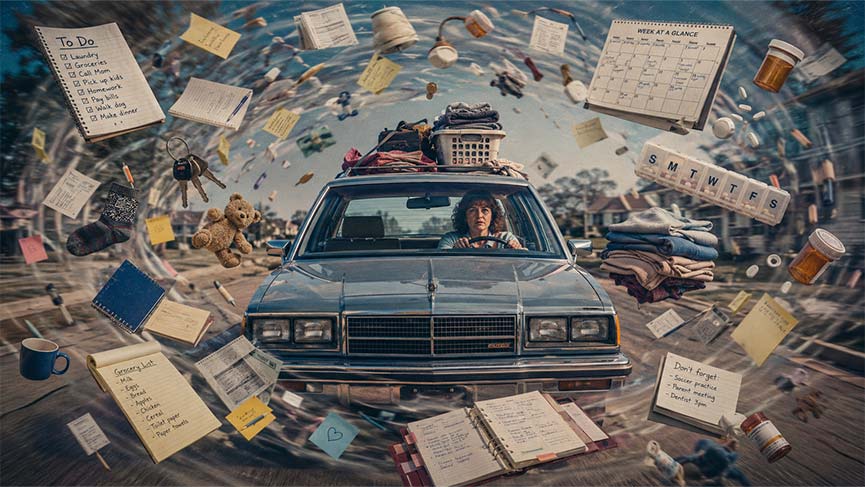
Camps, carpools, aging parents, college boxes, and you're gripping the wheel like Dorothy in a station wagon.
Editor’s Note
Summer is supposed to feel lighter. Cute little lemonade stand energy. Bare feet. Slower mornings.Instead, somehow, I become a transportation department with hair frizz in a full domestic tornado.
It’s not that driving is hard. It’s that summer driving is never just driving. It’s remembering, planning, timing, adjusting, rerouting, and communicating all before lunch.

Tornado Season Touches Down
Summer break has a way of making every family schedule look like a weather system.
At first, the sky looks calm. School has ended and the calendar opens up. Everyone lies to themselves and says “It will be so nice to slow down.”
Then the winds shift. Camp starts Monday. Aging mom has an appointment Tuesday.
One kid needs cleats, and another needs sunscreen. Someone else needs to be picked up early, and your dog’s prescription is ready. The car needs gas and your work call starts in six minutes.
And suddenly you are inside the Summer Uber Tornado, trying to keep everyone alive, hydrated, and vaguely on time.
Summer transportation looks simple on paper, but in real life, it’s never just driving. It’s checking the time, the weather, “does the camp end at 2:30 or 3?”, “maybe no one will notice my oldest just has a learners permit, can he drive my youngest?”. All of these thoughts race through your head while you’re checking whether you have emotionally left your body and are now floating somewhere above Target.
By mid-June, the family car becomes less of a vehicle and more of a storm shelter with cupholders.
Summer Break Is Not a Break for the DD (Default Driver)
Summer removes the structure that quietly holds the year together. Now you build your own infrastructure and it ebbs and flows all summer long.
The emotional weight is not only the number of places people need to go. It’s the fact that one person often becomes the keeper of the whole weather map.
Not everyone sees the storm forming or is checking the radar. Only you know the pile up that happens with one late start, that sends the whole day spinning. That is why “just driving” can feel so draining. Because you are not only moving bodies. You are moving expectations and personalities. You know who will be hangry after their appointment or class, you know who is going to fight over the radio station, who will need to have a gatorade immediately and who will fall asleep 2 seconds into the car.
Why It Feels Like a Tornado
Eve Rodsky, author of Fair Play, puts the mental load plainly: “Having to remind your partner to do something doesn’t take that something off your list. It adds to it.”
And that is exactly what happens with summer logistics.
If you have to remember the pickup time, remind someone else, explain where the cleats are, text the address, check whether they actually left, and then answer three follow-up questions from the car…Congratulations, you are still the dispatcher. This is where the resentment can sneak in. Not because you hate helping your family, because being the only person who sees the whole storm system is exhausting. The drive itself might take 18 minutes, but the mental prep took two days.
Dorothy, grab Toto. We are not in “slow summer mornings” anymore.
This is why summer caregiving can feel so disorienting. The rhythm changes, but the expectations don’t. You are still supposed to work, parent, care, plan, feed, drive, respond, and remain emotionally available. With humidity.
How rude.
GenSando Toolkit: Stop signs for the family Uber.
You may not be able to stop the summer transportation swirl completely, but you can make it less chaotic.
Think of this as your emergency weather kit for the rush season.
1. Create a “Leave Time,” Not Just an “Arrive Time”
Calendar entries should include when you need to leave, not only when something starts.
Instead of:
Camp starts at 9:00 Use: Leave for camp at 8:25
This saves your brain from doing calendar math while someone is asking where their goggles are.
2. Make a Car Command Basket
Keep one basket or tote in the car with summer basics:
- sunscreen
- wipes
- water bottles
- shelf-stable snacks
- extra hair ties
- small first-aid kit
- phone charger
- cheap sunglasses
- trash bags
- backup deodorant, because… teens.
You already know you’ll need all of it.
3. Assign “Route Owners”
If someone else is helping with transportation, give them full ownership of that route.
Not:
“Can you help with pickup?” But: “You own Tuesday camp pickup. That means address, time, gear, and getting them home.”
Fewer mental tabs open in your brain!
4. Track Mileage for One Week
Not forever. Just one week.
Write down:
- how many trips you made
- how many miles you drove
- how much gas you used
- how many times you had to adjust your own schedule
This is not to shame anyone, it makes the invisible visible.
Sometimes the family needs to see the storm path before they understand why you are tired.
5. Build in a Parking Lot Pause
Before walking back into the house, take two minutes.
- Sit in the car.
- Breathe.
- Finish the song.
- Stare into the middle distance like a woman in a pharmaceutical commercial.
This counts.
Laugh Line
Summer break: when your car becomes your office, cafeteria, and therapy room.
Life Line
If you feel like you are always driving, tracking, and adjusting, you are not failing summer.
Fine Print of Midlife
We see you. We get you. And we’re right here with you.
Spotlight






SUBSCRIBE TO
GenSando
Delivered weekly.