.svg)

One You Care For, One You Conflict With: When Care and Trauma Collide
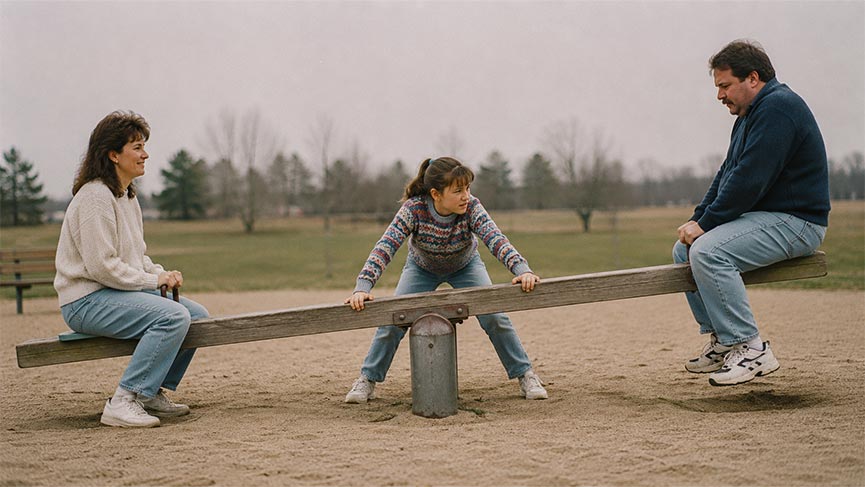
The Reality of Loving One Parent While Struggling With the Other
Editor’s Note
There’s a version of caregiving people don’t talk about enough: when one parent feels emotionally safe to care for and the other doesn’t. Sometimes it’s because of years of complicated history. Loving a parent and protecting yourself from them can exist at the same time.
Aging doesn’t magically erase family history. Sometimes caregiving brings healing. Sometimes it reopens every unresolved thing.
The Ugly Side of Caregiving
A lot of caregiving content assumes one thing: that caring for aging parents automatically feels loving, reciprocal, and emotionally uncomplicated. For some people, it doesn’t. In fact, a national study from Cornell University found that more than 1 in 4 Americans are estranged from at least one family member, with parent-child estrangement among the most common forms.
Sometimes one parent feels easier to show up for because the relationship was safer, healthier, or more emotionally stable over time.
The other parent may bring emotional baggage in the form of unresolved trauma, addiction history, narcissistic behaviors, mental illness, etc… and suddenly caregiving becomes more than just logistics.
Research published in The Gerontologist found that difficult family dynamics and caregiving strain are closely linked to higher emotional stress and depressive symptoms among adult children caring for aging parents.
Translation: When caregiving reactivates old emotional wounds, the stress level changes completely.
This is caregiver stress with a side of layered grief.
“But They’re Still Your Parent”
That sentence alone has emotionally trapped a lot of adults in caregiving situations that feel unsafe, retraumatizing, or psychologically overwhelming.
The reality is a biological relationship does not automatically erase the emotional harm, manipulation, instability and fear from decades of pain. And yet many adults still carry enormous guilt for struggling to care for one parent differently than the other, especially during aging and decline.
According to research from the American Psychological Association, adverse childhood experiences and long-term family trauma can continue affecting emotional regulation, stress responses, and relationship patterns well into adulthood. So when caregiving forces constant interaction with a difficult parent, the body often remembers before the brain can rationalize it.
That tension is real.
GenSando Tool
The Safe Distance Care Plan
Let’s stop focusing only on: “Do I care?”
The better question might be: “How do I care for them without hurting myself in the process?”
Here are some things to help and examples of what this can look like:
Helping From a Distance
Handle things remotely like:
- paying bills online
- ordering groceries or medications
- setting up meal delivery or rides
Limiting Communication
Try:
- shorter scheduled calls instead of constant texting
- responding during certain hours only
Coordinating Care Without Emotional Closeness
You can still:
- communicate with doctors
- organize caregiving schedules
- manage paperwork
…without forcing deep emotional connection that feels unsafe.
Setting Strict Boundaries
Examples:
- staying in a hotel instead of their home
- bringing another family member to appointments
- leaving conversations when they become abusive or manipulative
Using Third-Party Support
Sometimes it helps to involve:
- in-home caregivers
- therapists
- care coordinators
- trusted family friends
Care is still care, even when it comes with boundaries.
Studies Confirm: This Is A Lot
- Cornell University Family Estrangement Research
- APA Trauma Research - American Psychological Association
- Journals of Gerontology Family Relationship Research
-
Laugh Line
Nothing says “complex family dynamics” quite like:
“I’ll coordinate the neurologist, but I cannot do brunch.”
Life Line
You are allowed to feel compassion and limitation at the same time.
Family trauma doesn’t magically disappear just because someone gets older. We totally get it and are with you.
Spotlight






SUBSCRIBE TO
GenSando
Delivered weekly.