.svg)

I Care… Just Not Exactly the Way You Want Me To
Aging Parents, Old Trauma, and the Guilt of Boundaries
Editor’s Note
All parents are different, and the tough ones can really wear on you, especially if there is family history there. Good thing we are adults and have the wisdom to instill boundaries and patience (sometimes).
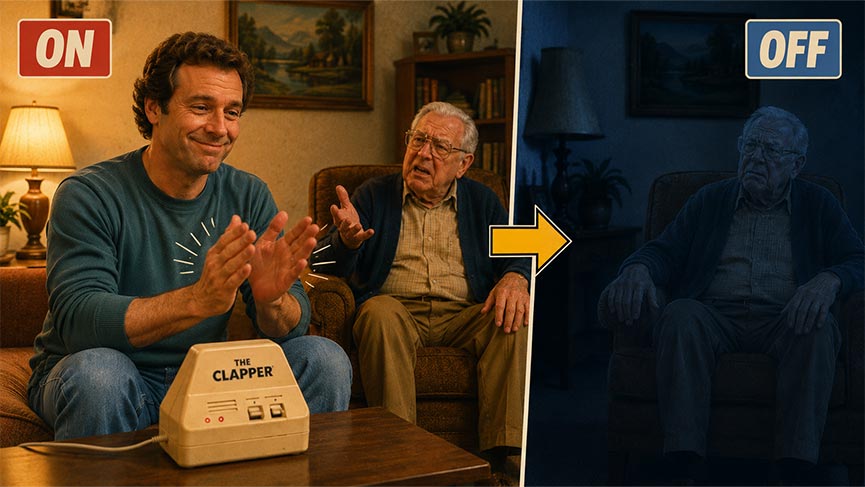
There’s a weird myth that adulthood magically turns difficult parents into easy relationships. I don’t see the on and off button.
“If You Really Loved Me…”
There are parents who ask for help, and then there are parents who use guilt, obligation, shame, and manipulation to demand care in specific ways.
Not just: “Can you help me?”, But:
- “If you loved me, you’d do this.”
- “You never cared about me.”
- “After everything I sacrificed for you.”
- “I guess I’ll just do it alone.”
- “Your sibling would never treat me this way.”
- “You’re abandoning me.”
Sound familiar? (We apologize for the wincing as you read this). For adult children with trauma history, those words don’t just create guilt, they activate survival mode.
When Caregiving Reopens Old Wounds
One of the most disorienting parts of caregiving a difficult parent is how quickly you can emotionally become 13 years old again.
Suddenly you’re overexplaining, people pleasing, emotionally freezing, and feeling responsible for their feelings. Please know this is NOT because you are weak, your nervous system remembers the role you had growing up.
Psychologists often refer to this as “regression under stress,” where adults can unconsciously return to old emotional patterns during high-pressure family dynamics.
The paperwork may be new, but the emotional roles can feel painfully familiar.

GenSando Tool Kit
He Said, She Said: The “What To Say Instead” Edition
How to avoid emotional dodgeball.
Mom or Dad Says:
“If you really loved me, you’d come over.”
Now You Say:
“I do care about you and I’m doing the best I can.”
Mom or Dad Says:
“I guess I’m just a burden.”
Now You Say:
“I know this is hard. I’m trying to figure it out too.”
Mom or Dad Says:
“Your sibling would never treat me this way.”
Now You Say:
“I’m still showing up, even if it looks different than you expected.”
What You Want To Say:
“Fantastic. Please contact them immediately.” (Just kidding. Mostly.)
Mom or Dad Says:
“After everything I did for you…”
Now You Say:
“Lets focus on what helps you right now.”
Mom or Dad Says:
“You’re abandoning me.”
Now You Say:
“Setting boundaries is not the same thing as abandoning someone.”
Mom or Dad Says:
“Nobody cares about me.”
Now You Say:
“I care about you. That’s why I’m here.”
GenSando Reminder:
You do not have to match emotional chaos with emotional chaos.
Compassion Fatigue in Complicated Families
Compassion fatigue gets even more complicated when caregiving involves a parent connected to past trauma. You may feel emotionally drained faster, need more space, or struggle to show up the way you think you “should,” and that exhaustion often gets mistaken for guilt or failure. But sometimes your mind and body are not rejecting the care itself, they’re reacting to years of survival mode finally colliding with caregiving.
This is also the moment to check in on your own mental health. Therapy, support groups, trusted friends, and honest conversations are important.
And if nobody has told you this lately:
You are allowed to protect your peace while still being a caring person.
Those two things can exist together.
Glossary Schmossary
Emotionally exhausted yet? Nothing like learning terms like “Regression Under Stress” and “Compassion Fatigue” alongside your morning coffee.
Check out our glossary that helps decode all the caregiving, trauma, and midlife terminology nobody prepared us for.
Academic Proof We’re Not Imagining This
- Psychology Today Family Regression Research
- American Psychological Association Trauma Research
- Cornell Family Estrangement Research
Laugh Line
Nothing says “healing journey” quite like hearing:
“After all I’ve done for you.” while actively scheduling their cardiology appointment.
Life Line
Sometimes caregiving isn’t just about helping someone age. It’s about navigating the complicated reality of loving someone who also hurt you.
This was a tough batch of articles. Why do parents have to suck sometimes?
Spotlight






SUBSCRIBE TO
GenSando
Delivered weekly.